EV Charger Replacement and Relocation in Broward County
EV Charger Installation Broward replaces and relocates home charging equipment when the current unit no longer fits the vehicle, connection or parking arrangement. The existing installation is reviewed before components are reused. To discuss replacement or relocation, Call Now.
Broward County Circuit Review Before EV Charger Replacement or Relocation
A new charger may have different electrical requirements, mounting dimensions or connection instructions. The breaker, wiring, endpoint and available panel capacity should be compared with the replacement equipment. Similar appearance or advertised output does not establish compatibility with the installed circuit. To request a Broward County replacement evaluation, Call Now.
- Review the existing breaker, wiring and electrical endpoint before installing replacement charging equipment.
- Compare the current connection method with the replacement charger'sdedicated charging circuitand electrical connection needs.
- Replacement equipment may require different mounting dimensions, connection instructions or available electrical capacity than the charger it replaces.
- Charger placement should support the vehicle's parking position and charging-port access.
- A hardwired charger and plug-connected equipment can use different electrical endpoints.
- The existing installation is reviewed before components are reused for a replacement or relocation project.
- EV Charger Installation Broward can help compare the current charging setup with the selected replacement equipment.
Changing vehicles or charger types can affect connector, cable and charging-load needs. Moving from plug-connected equipment to a hardwired charger, or the reverse, can also change the electrical endpoint. Confirming the vehicle and exact replacement equipment helps define what may remain and what must change.
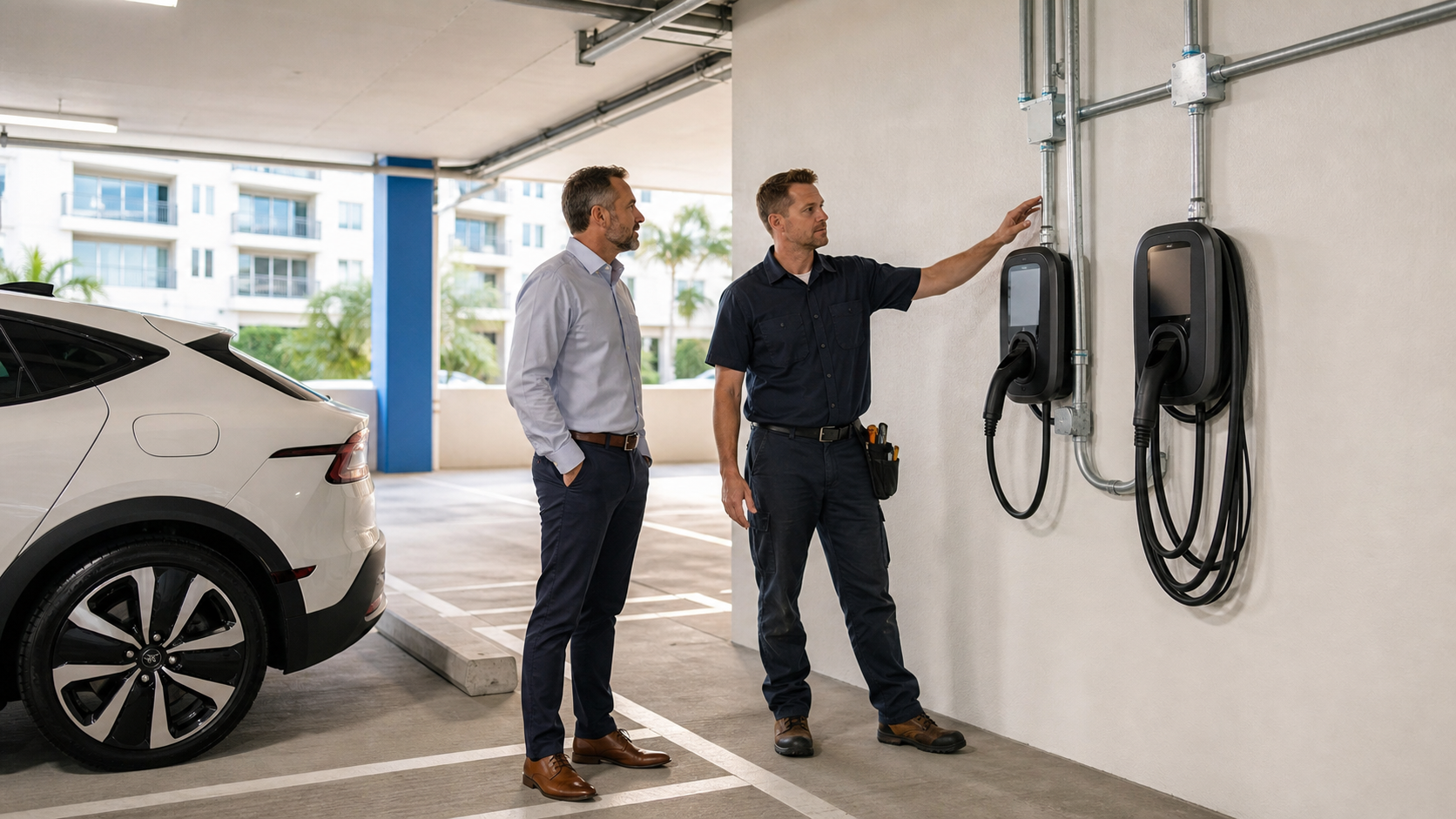
Replacing a home charger starts with comparing the old equipment, installed circuit and new charging needs.
Request Charger ReplacementChanging Vehicles or Charger Types
A vehicle change can create different connector, cable and charging-load needs. The replacement charger should be considered alongside the installed circuit, connection method and available panel capacity. A charger that looks similar to the old unit may still have different mounting dimensions or electrical requirements.
Existing Circuit
Compare the existing breaker, wiring and available capacity with the replacement charger's requirements.
Connection Method
Confirm whether the new equipment uses the same connection method or requires a different electrical endpoint.
Mounting Location
Review whether the existing mounting position and dimensions remain suitable for the replacement charger.
Vehicle Access
Plan the charger around daily parking, cable reach and charging-port access for the vehicle.
The selected charger, installed circuit and connection method should be reviewed as one home charging setup.
If the replacement equipment changes the requested charging load, a panel-capacity evaluation can compare it with household demand and the proposed electrical connection.
Reevaluate Panel CapacityRelocate a Charger for Better Vehicle Access in Broward County
Moving a charger can change the wiring distance, mounting requirements and cable path. The new position should be planned around daily parking, charging-port access and the electrical route. A relocation is more than remounting the enclosure when the circuit endpoint must also move. To discuss relocating equipment at a Broward County home, Call Now.
New Parking Position
A charger location should work with where the vehicle is parked each day and where its charging port is positioned.
Circuit Route
Relocation can change the wiring distance and route between the electrical panel, circuit and new charging location.
Mounting and Cable Path
The new location should account for mounting requirements, cable reach and the route needed to serve the vehicle.
When a Second EV Changes the Project
Adding another EV may call for dual-vehicle planning rather than simply moving the first charger. Both parking positions, charging schedules, connectors and available capacity should be considered. The project may involve one shared charger, separate equipment or compatible managed charging.
Plan the Right Home Charging Update
Replacement and relocation projects can overlap with other residential home EV charger installation needs. EV Charger Installation Broward provides planning for replacement equipment, panel-capacity evaluation and dual-EV home charging when the existing setup no longer matches the household's vehicle or parking arrangement.
Replacement Charger Planning
Compare the existing charger, circuit and connection with the new equipment requirements. Request replacement planning to evaluate whether the installed electrical components, mounting location and parking access remain suitable for the selected charger.
Review Charger Replacement Guidance →Panel-Capacity Recheck
Reevaluate capacity when replacement equipment changes the requested charging load or circuit arrangement. Compare the new charger with household demand, panel conditions, breaker requirements and the proposed electrical connection.
Schedule Capacity Evaluation →Dual-EV Home Charging
Plan for two vehicles when relocation alone will not meet household needs. Consider both parking positions, charging routines, selected equipment, connection choices and available electrical capacity.
Request Dual-EV Planning →Dedicated Charging Circuits
A replacement or relocated charger may need a dedicated charging circuit that fits the new equipment and electrical endpoint.
View Dedicated Circuit Installation →Hardwired EV Charger Installation
Changing from plug-connected equipment to a hardwired charger can change the electrical endpoint and should be reviewed with the existing circuit.
View Hardwired Charger Installation →Level 2 Charging
Level 2 charging equipment can have different electrical requirements from the charger currently installed at the home.
View Level 2 Charger Installation →Charger Replacement and Relocation Questions
For replacement equipment that changes the requested charging load or circuit arrangement, reevaluate panel capacity for new equipment. Homeowners can also review guidance for replacing a home charger.
Discuss Your Existing Charging Setup
EV Charger Installation Broward can review the existing charger, circuit, connection method and new parking location before replacement or relocation work begins. For help planning a home charging update in Broward County, Call Now.
Residential EV Charger Installation Near Broward County
View the Fort Lauderdale and Broward County, Florida service area and request residential EV charger installation.